Iris
NotesIris

Notes

Article

Fewer Draw Calls, the Same Picture

RIRRI'S, the little 3D shop where my projects live, asked a phone to draw 846 separate things every frame. I brought that down to 531 without changing anything you can see. This is the method in seven steps, with the numbers from each and what to try on your own scene.
Article

Knowing When to Stop

Sometimes I'm full and still want dessert. That gap between wanting something and benefiting from it has a business version: an AI marketing tool can predict who will buy, but not whether pushing the sale is worth it. A walk from marginal utility to customer lifetime value and uplift modeling, with a small café you can run yourself.

Article

When the Agent Becomes the Shopper

A personal agent that knows your route, your schedule and what your family likes to eat doesn't just rank gas stations differently. It can surface options you would never have searched for. That shifts discovery toward agents, and it means businesses an agent can't find, read or reach may never make the shortlist, small businesses most of all.

Note

Keep what the simulator showed apart from what the real watch proved.

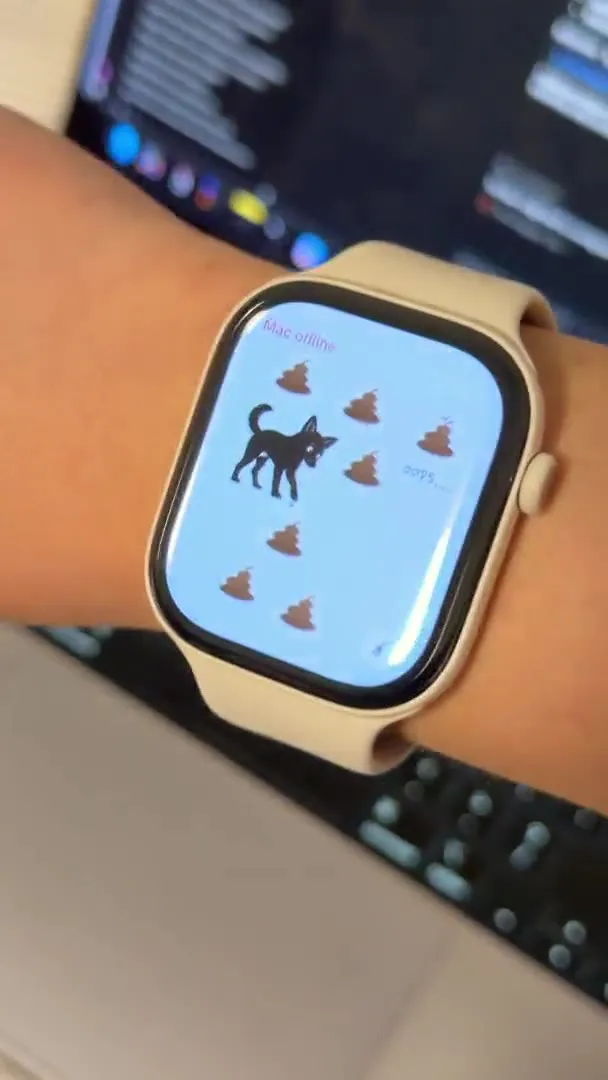
AgentWatch on a real wrist: the black dog and its mess, with “Mac offline” at the top

AgentWatch runs on a physical iPhone and Apple Watch. Remote, Ambient and the Focus-driven mood have been checked on the real watch.

Everything else is labelled simulator-only, and the docs keep simulator evidence apart from what was physically verified, so I never confuse the two.

Learned from AgentWatch · Project record

Note

The surer the model sounds, the more I ask: did you check, or do you remember?

While making a cover, the model told me, very confidently, that my three best-performing covers were all real photos. I said that didn’t sound right. It pulled up the original images and looked again: the best one wasn’t a photo at all, but a designed card filled edge to edge. The whole rule had to be rewritten.

What the strong covers really shared was a full frame, one piece of real evidence and enough contrast. The model had stated a pattern from memory while the originals were right there.

Now, whenever a claim can be checked (an image, a number, a file), I ask which it is before I believe it.

Learned from making covers for my posts

Note

Ask the model for one record per line, not for coordinates.

When the layout model guessed coordinates, the pages drifted. Asking it for one record per line made its output more predictable, easier to review and easier to fix.

Learned from Visual Notebook

Note

A status has to be observed, not written as a slogan.

A status in the composer reports what actually happened: saving, saved or failed. A real value isn’t brand copy.

Learned from Visual Notebook

Note

Silence can be a trustworthy state.

A briefing that says “nothing today touches you” is easier to believe than one that always finds something.

So a signal stays only when the source really names the product, market, exchange rate or channel. Zero relevant items is a correct result, not a failure. If a source fails, the briefing carries on in watch-only mode, with a caveat.

Learned from World Briefing Buddy

Changed my mind

Writing it simpler would bring beginners in.

Understanding a post isn’t the same as wanting its topic.

I believed that if I wrote more simply, beginners would come. That turned out to be wrong.

A beginner can understand a post and still not feel the topic is hers. Being able to follow it and wanting it are two different things.

Learned from writing my posts